
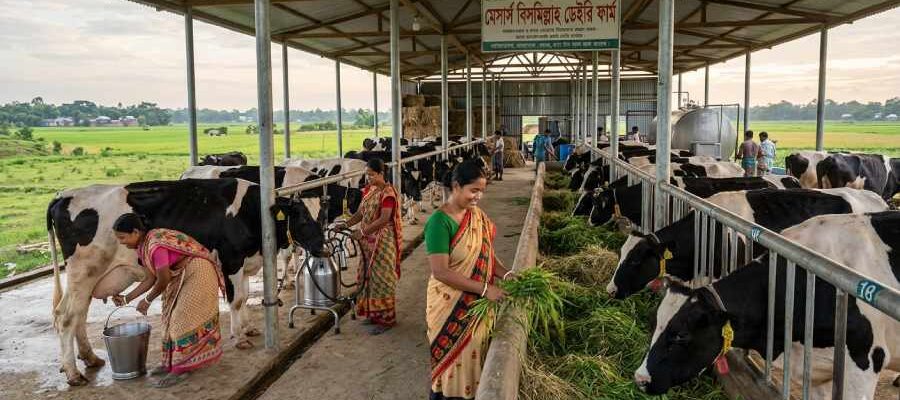
The foundation of any dairy farm is the milk-producing capacity of its cows. In many cases, farmers fail to achieve their expected milk yield despite having high-quality dairy breeds, primarily due to inadequate feeding practices and insufficient animal care. To maximize milk production and improve farm profitability, it is essential to provide the right nutrition and maintain proper management practices. The following comprehensive guideline outlines the key factors for increasing milk production in dairy cattle.
1. Ideal Feeding Management for Higher Milk Production
Milk production largely depends on the quality and nutritional value of a cow’s diet. To achieve optimal milk yield, cows must receive a balanced and well-formulated ration.
High-Quality Green Forage (Roughage)
The primary key to increased milk production is the provision of protein-rich green fodder. Dairy farms should regularly feed high-yielding forage varieties such as Napier grass, Jumbo grass, Pakchong grass, and Alfalfa. Green forage improves digestive efficiency and contributes to higher milk yield and butterfat content.
Balanced Concentrate Feed
Feeding grass alone is insufficient for achieving maximum milk production. Dairy cows require concentrate feed based on their body weight and daily milk output. As a general guideline, approximately 1 kg of concentrate feed should be provided for every 3 liters of milk produced.
Recommended Concentrate Feed Composition
A balanced concentrate ratio may include:
- Wheat bran
- Rice bran
- Oilseed cake (mustard or soybean cake)
- Crushed chickpeas or pulse grains
- A small amount of molasses
Bypass Fat and Calcium Supplementation
Large quantities of calcium are lost through milk production. Therefore, dairy cows should receive regular calcium supplements, Dicalcium Phosphate (DCP), and vitamins A, D, and E as part of their feeding program. Bypass fat supplementation can also help increase energy intake and support higher milk yields.
Adequate Supply of Clean Water
Approximately 87% of milk consists of water. Therefore, dairy cows must have unrestricted access to clean, fresh drinking water throughout the day. A lactating cow may consume between 50 and 70 liters of water daily.
2. Special Care and Dairy Farm Management Practices
In addition to nutrition, the physical and psychological well-being of dairy cows directly affects milk production.
The Role of Oxytocin Hormone
When cows are kept in a calm, stress-free environment, their bodies naturally release oxytocin, a hormone that facilitates milk letdown from the udder. Fear, pain, or stress can significantly reduce milk production.
Comfortable and Well-Ventilated Housing
The farm environment should remain dry, clean, and well-ventilated with adequate natural light. Floors should be non-slippery, and manure should be removed promptly. During periods of extreme heat, fans or fogging systems should be used to reduce heat stress, as elevated temperatures can significantly decrease milk production.
Proper Milking Procedures
Milking should be performed at fixed times each day. Before milking, the udder should be washed with lukewarm water and dried using a clean cloth. Milkers must maintain proper hand hygiene. Ideally, the milking process should be completed within 7–8 minutes.
Teat Dipping for Mastitis Prevention
After milking, the teat canal remains open for approximately 20–30 minutes, making it vulnerable to bacterial infection. To prevent mastitis, teats should be dipped immediately after milking in an iodine- or potassium-based disinfectant solution. Cows should remain standing for at least 30 minutes after milking; offering concentrate feed during this period encourages them to stay upright while eating.
3. Health and Reproductive Management
Deworming and Vaccination
Cows should be dewormed before entering lactation and thereafter according to a veterinarian’s recommendations. Vaccinations against common diseases such as Foot-and-Mouth Disease (FMD), Black Quarter (BQ), and Hemorrhagic Septicemia (HS) should be administered on schedule.
Care During Pregnancy
Milk production should be discontinued during the final two months of pregnancy (the dry period). Providing nutrient-rich feed during this stage promotes proper udder development and supports higher milk production after calving.
Daily Dairy Farm Checklist
| Management Practice | Benefit |
|---|---|
| Green fodder and silage | Supports digestion and increases milk fat content |
| 24-hour access to clean water | Maintains consistent milk production |
| Teat dipping after milking | Prevents mastitis and udder infections |
| Cool and stress-free environment | Reduces stress and enhances milk yield |
Conclusion
Increasing milk production on a dairy farm is not a matter of chance; it is the result of sound scientific management. Ensuring timely access to nutritious feed and providing cows with a comfortable, disease-free environment are the most effective ways to improve productivity and significantly increase farm profitability.
