
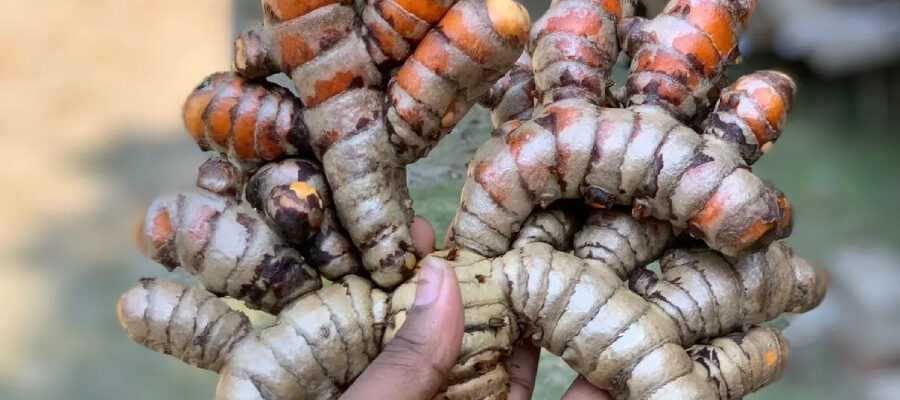
Turmeric is not only an essential spice; it has now become a highly profitable cash crop. Due to its high yield with relatively low cost and labor, turmeric cultivation is becoming increasingly popular among farmers. However, to achieve the desired profit, it is crucial to follow modern cultivation methods and take the right steps at the right time.
Below are the details of profitable turmeric cultivation:
1. Suitable Soil and Land Selection
Fertile loamy or sandy loam soil is most suitable for turmeric cultivation. Make sure that water does not accumulate in the field. Select high or medium-high land that receives plenty of sunlight.
2. Selection of Suitable Varieties
High-yielding varieties are essential for better production. Some popular varieties suitable for cultivation in Bangladesh include:
- BARI Turmeric-1 (Sinduri): Good yield and bright color
- BARI Turmeric-2 and 3: Higher disease resistance
- Improved local varieties: Dimla or Pabna varieties are also popular
3. Appropriate Planting Time
The ideal time for planting turmeric is from the Bengali months of Chaitra to Baishakh (mid-March to mid-May). Planting during this time allows the crop to establish well before the monsoon begins.
4. Land Preparation and Planting
The land should be plowed 3–4 times and leveled to make it fine and loose.
- Seed treatment: Treat seed rhizomes with fungicide before planting to reduce disease incidence.
- Planting method: Maintain a distance of 20 inches between rows and 10–12 inches between plants. Plant the rhizomes at a depth of 3–4 inches.
5. Fertilizer Management
Balanced fertilization is essential for good yield. The following amounts can be applied per acre:
- Cow dung: 4–5 tons
- Urea: 80–90 kg
- TSP: 60–70 kg
- MOP: 80–90 kg
- Gypsum: 35–40 kg
Tip: Apply cow dung and TSP during land preparation. Apply urea and potash fertilizers in 2–3 split doses.
6. Irrigation and Weed Control
- Irrigation: Provide irrigation if the soil lacks sufficient moisture. However, turmeric cannot tolerate waterlogging, so ensure proper drainage through channels.
- Weeding: Keep the field weed-free, especially during the first 3–4 months after sprouting.
7. Pest and Disease Management
The main problems in turmeric cultivation are leaf blight disease and stem borer insects.
- Use Mancozeb-type fungicides to control leaf blight.
- Use approved insecticides to control pests.
- Ensure proper drainage to prevent rhizome rot.
8. Harvesting and Processing
Turmeric is ready for harvest 9–10 months after planting when the leaves start drying. Usually, harvesting is done during the months of Magh to Falgun. After harvesting, clean the rhizomes, boil them, and then dry them in the sun before storage.
Turmeric cultivation involves low risk, and its market demand remains consistently high. With proper variety selection, balanced fertilization, and good drainage management, farmers can easily become self-reliant through turmeric farming. By using modern agricultural techniques, it is possible to achieve higher profits even from small land areas.
