
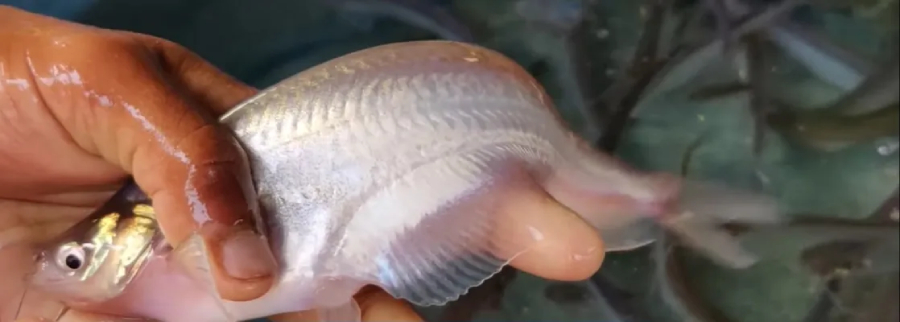
In modern, profitable Pabda fish farming, special attention should be paid to key aspects. Since Pabda is a scaleless and nocturnal fish, it is important to provide feed at night. Additionally, aquatic plants such as water hyacinth should be tied with bamboo at one corner of the pond to create a suitable habitat. The pond bottom should be even and smooth.
Due to its scaleless body and fewer bones, the Pabda fish has long been a favorite among people of all ages in Bengal. It is also nutritionally rich and commands a good market price.
With the advancement of artificial breeding techniques, Pabda fry are now readily available. Profitable production can be achieved through the monoculture of Pabda fish.
Pabda fish can also be cultured in polyculture with major carps such as Rohu, Catla, and other carp species. However, monoculture of Pabda is generally more economically profitable than mixed culture.
Pond Selection for Pabda Culture
The pond should be located in an area that receives adequate sunlight. In flood-prone areas, pond embankments should be raised. Bushes, holes, and unwanted vegetation around the pond should be cleared and leveled, as these are harmful to Pabda culture.
Large trees such as eucalyptus near the pond should be pruned regularly. Ideally, the pond should receive at least 5–6 hours of sunlight daily.
Pond Preparation for Scaleless Pabda Fish
The following steps should be followed sequentially:
- Nursery ponds should be 10–50 decimal in size with a water depth of 4–5 feet.
- Remove unwanted, predatory fish and aquatic weeds. Drying the pond is preferable for complete eradication.
- If drying is not possible, apply 25–30 grams of rotenone powder or Phostoxin tablets per decimal per foot of water to eliminate predatory fish.
- After 3–4 days, apply lime at 1 kg per decimal evenly across the pond.
- After another 3–4 days, apply 5–7 kg of cow dung, 150 g of urea, and 75 g of TSP per decimal.
- Install a mosquito net barrier (3–4 feet high) around the nursery pond to prevent the entry of snakes and frogs.
- Apply Sumithion 24 hours before stocking to control insects. Follow package instructions.
- To maintain water color, apply 250 g Bright Gold (granular) per decimal.
- Stock fry or 2–3 inch fingerlings 5–7 days after fertilization.
- If gas accumulates at the pond bottom, apply “Gas Top” to release it.
Nursery Management
After proper preparation:
- Stock 100 g hatchlings or 6,000–8,000 fry (8 days old) per decimal.
- Feed boiled egg yolk for the first 3 days.
- For 1 kg fry, provide 8 egg yolks in the morning and 8 in the evening/night daily.
- Filter egg yolk through a cloth, mix with water, and distribute evenly.
After 3 days:
- Feed powdered nursery feed (e.g., Renu feed, Tiger brand, etc.).
- Mix feed with water and distribute evenly.
- Mustard oil cake can also be soaked and fed.
Feeding guidelines:
- First week: feed equal to body weight (e.g., 1 kg fry → 1 kg feed/day).
- Feed twice daily and once at night.
- Increase feed gradually according to fish growth.
Disease Management in Nursery
Viral infection is the most serious threat to Pabda fry, and once infected, survival is unlikely.
Preventive measures:
- Apply Timsen or Virex at 2 g per decimal.
- Weekly application: 200 g salt, 2.5 g potassium, and Vitamin C.
For oxygen deficiency:
- Use oxygen tablets such as Oxy Tap, Oxy Gold, or Oximore.
For ammonia gas:
- Aerate the pond or apply Gasonex.
Grow-Out Pond Preparation
Preparation is similar to nursery ponds. Application of cow dung is optional. The pond bottom must remain even.
Water hyacinth should be tied with bamboo at one side of the pond for a better habitat.
Stocking Density
- Monoculture: 500–1000 fingerlings per decimal.
- Polyculture: Add 8–10 fingerlings (4–5 inches) per decimal of Rohu, Catla, Grass Carp, and Mrigal.
Mixed culture helps maintain pond ecology. Before transport, fingerlings should be treated with antifungal medication.
Pabda can also be cultured with Tilapia or Stinging catfish.
Feeding Management
About 70% of total investment goes into feed.
- Commercial feed containing 32–38% protein is suitable.
- Homemade feed formula:
- 30% fish meal
- 30% mustard oil cake
- 30% rice bran (or similar)
- 10% wheat bran + vitamin premix
Since Pabda is nocturnal, feeding should be done twice at night.
Feeding rate:
- Start with 12% of body weight.
- Reduce by 1% every 15 days.
- When fish exceed 30 g, feed at 5% of body weight.
Diseases of Pabda Fish
1. Dropsy (Swollen Belly Disease)
Causes:
Excess organic matter, high stocking density, poor water quality, ammonia and hydrogen sulfide gas.
Symptoms:
- Swollen abdomen
- Fluid discharge from the anus when pressed
- Presence of gas or liquid inside
Treatment:
- Mix 5 g oxytetracycline (Tetravet), 1 g Vitamin C, and 2 g Lesifos per kg feed for 3–5 days
- In severe cases, apply 5 g oxytetracycline per decimal in pond water
2. Ulcer Disease
Symptoms:
- Red lesions on the body
- Pus discharge from wounds
Treatment:
- Immediately remove infected fish
- Treat fish in salt solution (100 g salt in 10 L water for 5–10 minutes)
- Preventive measure: Apply 1 kg lime and 1 kg salt per decimal in August–September
- For treatment: Same dose applied in a pond (7–8 ft depth) helps recovery within two weeks
Harvesting and Marketing
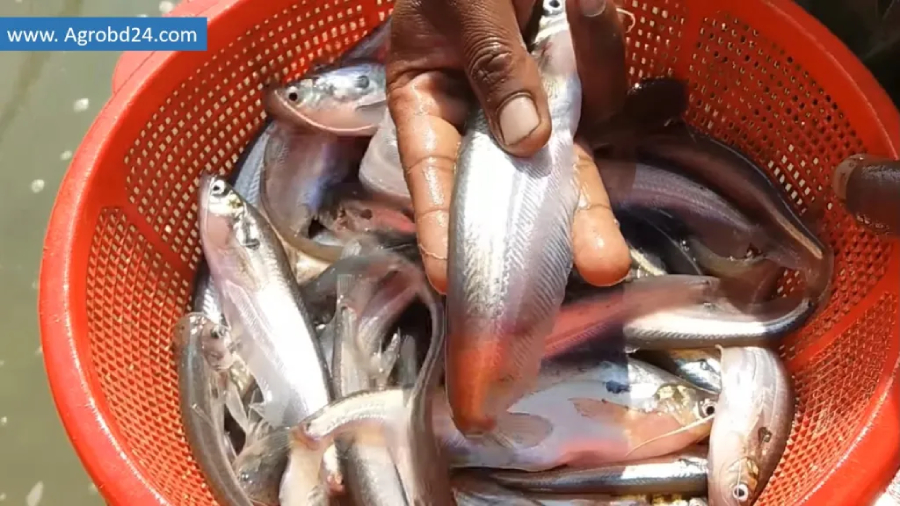
Pabda fish reach marketable size (18–20 fish per kg) within 6–7 months. Selling should be based on favorable market prices.
Profitability and Cost Management
Maintaining a proper record book is essential to track all expenses and income from the beginning to the end of the farming cycle. Proper accounting helps reduce unnecessary costs and increases profitability.
